
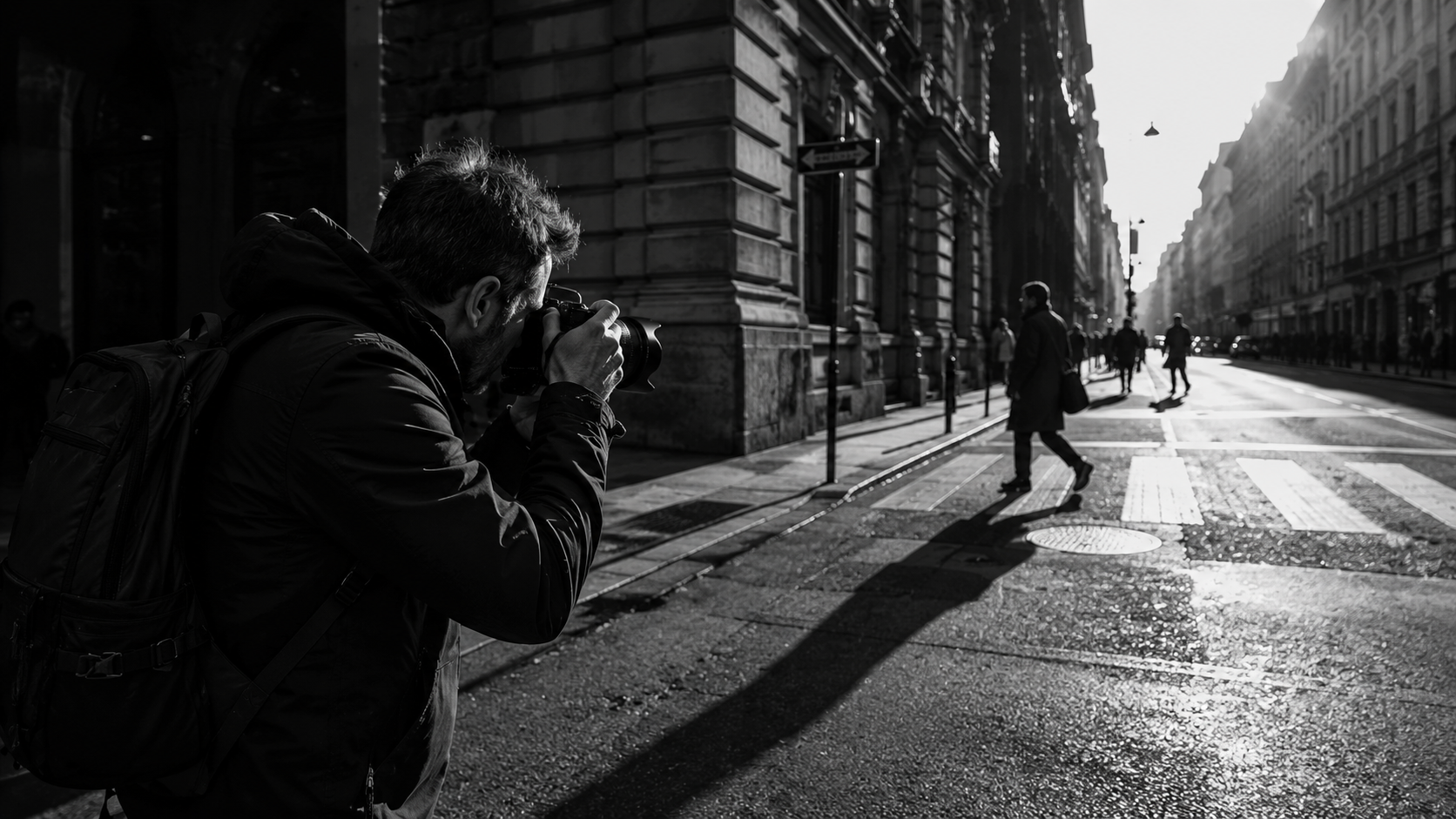
In a world flooded with AI-generated visuals, hyper-saturated social media content, and endless streams of colorful imagery, black and white photography is experiencing an unexpected resurgence. What was once considered a classic art form is now becoming a powerful creative choice for photographers, brands, designers, and visual storytellers seeking authenticity and emotional impact.
As artificial intelligence transforms how images are created and edited, many creators are returning to monochrome photography to emphasize the elements that matter most: light, shadow, composition, texture, and emotion. Black and white photography removes distractions and allows viewers to focus on the essence of an image.
The growing popularity of monochrome visuals aligns perfectly with the broader movement toward minimalism and intentional design discussed throughout Black White Bliss. Just as designers embrace limited palettes to create stronger visual communication, photographers are rediscovering the power of black and white imagery.
Why Black and White Photography Still Matters
Color photography dominates modern media, but black and white remains uniquely effective. Without color competing for attention, viewers naturally focus on contrast, shapes, expressions, and storytelling.
This visual simplicity creates a stronger emotional connection. A portrait becomes more intimate. An architectural image becomes more dramatic. A street scene feels more timeless.
Many of the world’s most iconic photographs were captured in black and white because monochrome emphasizes meaning over distraction. That principle remains just as relevant today.
The Influence of AI on Visual Trends
Artificial intelligence has made image generation easier than ever. Millions of colorful AI-generated images are created every day. While these tools offer exciting creative opportunities, they have also increased visual noise.
As a result, many photographers are embracing black and white as a way to stand apart from the flood of highly processed visuals. Monochrome imagery often feels more authentic and intentional.
This trend mirrors the rise of minimalist branding and restrained design approaches. Rather than adding more visual elements, creators are focusing on stronger fundamentals.
For additional insight into modern visual trends, visit Adobe Photography.

Emotion Becomes the Primary Subject
One of the greatest strengths of black and white photography is its ability to communicate emotion.
When color is removed, subtle facial expressions become more noticeable. Light and shadow create mood. Textures gain prominence. The image becomes more about feeling than appearance.
This emotional depth is one reason why monochrome portraits continue to remain popular among professional photographers.
Many contemporary creators intentionally convert images to black and white when they want viewers to focus on human connection rather than visual distractions.
The Timeless Appeal of Monochrome
Design trends change rapidly. Photography trends do as well. Yet black and white imagery remains relevant decade after decade.
Monochrome photographs often feel timeless because they are less tied to specific eras. Bright colors can immediately date an image, while black and white imagery maintains a classic quality.
This timelessness makes monochrome photography particularly effective for branding, editorial work, and fine art projects.
You can explore related concepts in our article on Contrast & Composition: Mastering Layout in Black and White.
How Modern Photographers Use Black and White
Today’s photographers use monochrome across a wide range of genres:
- Street photography
- Portrait photography
- Architectural photography
- Fashion photography
- Documentary storytelling
- Fine art photography
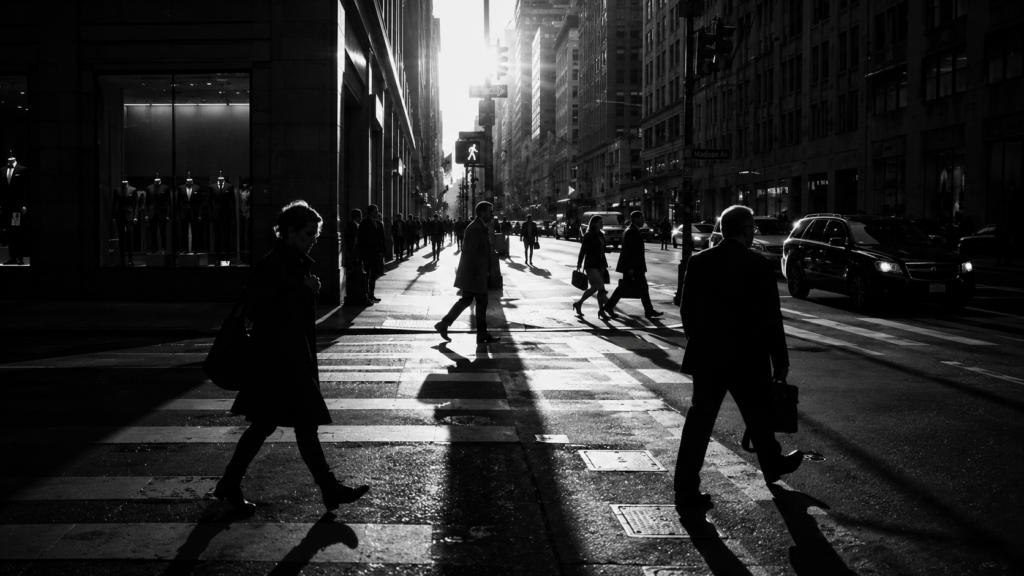
Street photographers often use black and white to highlight urban textures and human interactions. Fashion photographers rely on monochrome to create elegant and sophisticated campaigns.
Architectural photographers use it to emphasize geometric forms and structural details.
The Importance of Light and Shadow
In black and white photography, light becomes the primary design tool.
Without color, photographers must rely on contrast to guide the viewer’s attention. Strong highlights and deep shadows create visual interest and establish mood.
This focus on light and shadow closely aligns with the fundamental design principles discussed throughout Black White Bliss.
Learn more about photography composition through Photography Life.
Social Media and the Return of Monochrome
Social media platforms are saturated with colorful content competing for attention. Ironically, this environment may be contributing to the renewed popularity of black and white imagery.
A carefully crafted monochrome image often stands out precisely because it looks different from everything surrounding it.
Many creators report stronger engagement on certain black and white photographs because viewers pause longer to examine the details.
For creative inspiration, visit LensCulture and Magnum Photos.
Tips for Creating Better Black and White Photography
If you’re interested in exploring monochrome photography, consider these principles:
- Look for strong contrast.
- Focus on texture and detail.
- Use dramatic lighting.
- Pay attention to composition.
- Simplify the frame.
- Emphasize emotion and storytelling.
These fundamentals often determine whether a black and white image feels powerful or flat.
The Future of Monochrome Photography
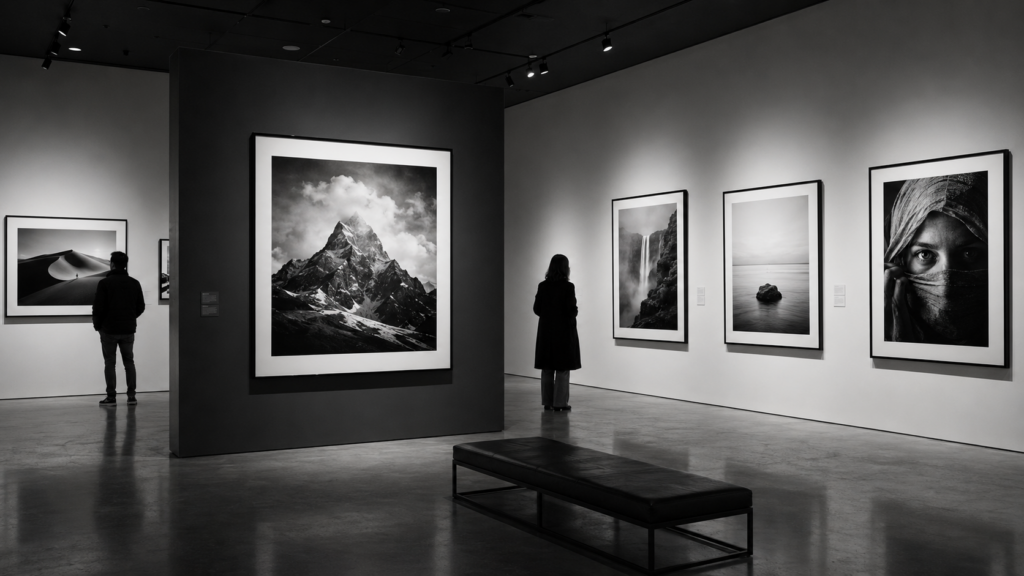
As AI-generated imagery becomes increasingly common, authenticity may become even more valuable. Black and white photography offers creators a way to communicate depth, intention, and artistic vision.
Rather than competing with colorful visual trends, monochrome photography continues to succeed by focusing on timeless fundamentals.
The comeback of black and white photography is not simply nostalgia. It reflects a growing appreciation for simplicity, clarity, and emotional storytelling.
Conclusion
Black and white photography is experiencing a revival because it offers something increasingly rare in today’s visual landscape: focus.
By removing color, photographers reveal the core elements of visual storytelling. Light, shadow, texture, composition, and emotion become the stars of the image.
In the AI era, where visual content is more abundant than ever, black and white photography continues to prove that less can truly be more.
For more monochrome inspiration, explore our articles on Monochrome Design in 2026 and AI-Assisted Monochrome Design.